Understanding B2B and B2C: Key Differences
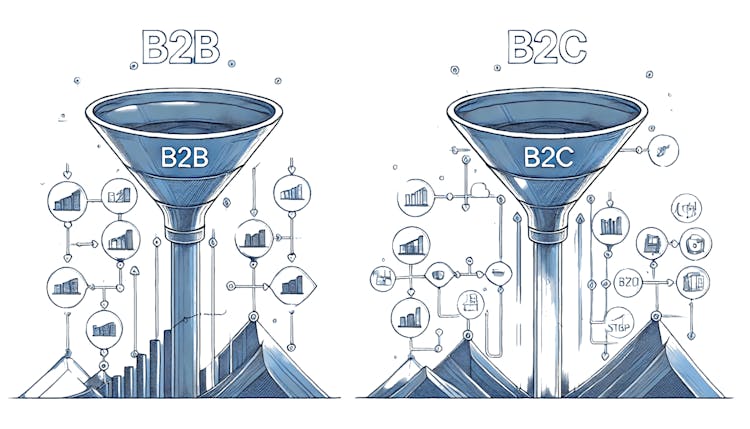
Defining B2B (Business-to-Business)
The term B2B, or Business-to-Business, denotes commercial interactions between two businesses. B2B entities provide products or services tailored to the requirements of other businesses, key in the interpretation of b2b b2c meaning. Such businesses often focus on improving operational efficiency or addressing specific industry needs. Examples in this realm include:
Firms developing customer relationship management (CRM) software
Distributors supplying products to retail outlets
Factories producing industrial equipment for other manufacturers
B2B interactions typically hinge on establishing trust and expertise and looking for tangible business results. It’s common to engage in price haggling, large-scale orders, and extended agreements, given that businesses are catering to other enterprises.
Defining B2C (Business-to-Consumer)
B2C, or Business-to-Consumer, constitutes the other part of the b2b b2c meaning, where companies target individual customers. This model aims at fulfilling personal requirements, often through seamless and meaningful purchasing experiences. Illustrations of B2C engagements include:
Purchasing from online retailers like eBay
Subscribing to digital streaming services like Spotify
Enjoying meals at restaurants
Unlike B2B, in B2C, emotional factors and trends strongly influence consumer choices. Businesses in this sector reach their clients through websites, social platforms, and retail shops, emphasising personal engagement and ensuring quick, effortless transactions.
Distinctions Between B2B and B2C
Target Audience: B2B addresses businesses, critical to the b2b b2c meaning, while B2C concentrates on individual buyers.
Sales Duration: B2B involves longer, more intricate sales processes, whereas B2C transitions are generally swifter with fewer hurdles.
Buying Behaviour: Purchases in B2B are methodical and evidence-driven, as opposed to the more impulsive and sentimental nature seen in B2C decisions.
Marketing Techniques: B2B depends on specialised content like white papers or industry fairs, while B2C excels with engaging adverts and social media tactics.
Examining Core Dissimilarities in B2B and B2C
Customer Engagement
Within the framework of b2b b2c meaning, B2B prioritises enduring alliances, collaborating closely with clients to tackle specific business hurdles. Conversely, B2C focuses on the shorter-term, transactional exchanges.
Advertising Approach
In B2B, marketing is about showcasing competence and adding value via educational initiatives, such as industry reports and networking events. B2C, on the other hand, relies on emotional pitches, employing visuals and storytelling to grab attention and encourage swift decisions.
Sales Intricacy
B2B sales necessitate bespoke solutions, negotiations, and detailed agreements, elongating the sales process. Meanwhile, B2C transactions are usually quicker, offering set-price products or services.

Tip
When embarking on a business venture, think about who you wish to serve. If your audience is other businesses, you’re dealing in B2B. If you’re selling straight to the public, then it’s B2C. Distinct strategies are needed for each to thrive.
