Online business from scratch: A complete guide
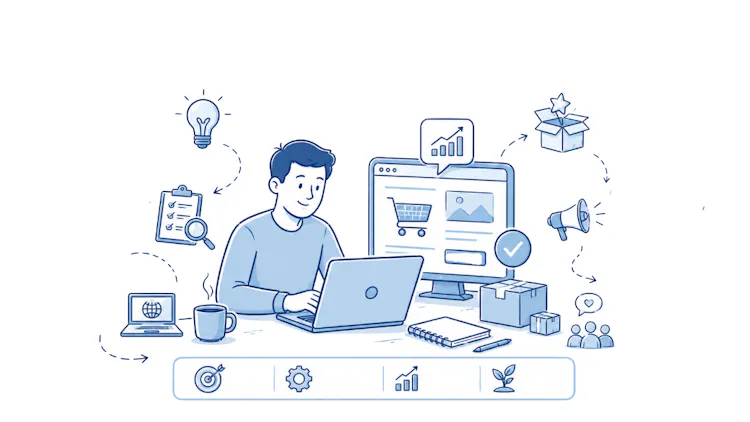
What is online business and why start now
Online business refers to any profit-making activity primarily conducted over the internet. This can include running an e-shop with your own products, offering remote services, or creating digital content. The initial costs are minimal compared to brick-and-mortar operations, and the market is virtually unlimited - your customer can be anyone with internet access.

The advantages are clear: low start-up costs, flexible working hours, the ability to work from anywhere, and easy scalability. However, you need discipline, basic digital literacy, and a willingness to keep learning.
Three main pathways to online business
Online business isn't just about e-shops. There are three main models, which can be combined.
E-commerce - selling goods online
The most classical form of online business. You can sell your own products (handmade items, food, clothing), buy and resell goods, or use the dropshipping model, where the supplier takes care of storage and shipping for you.
To get started, you need: products or suppliers, an e-commerce platform (Shoptet, Shopify, WooCommerce), and a method to reach customers - that is, marketing.

You don't have to build your own e-shop immediately. Start on marketplaces like Fler, Etsy, or the UK version of Vinted and see if there is demand for your products. Only then invest in your own solution.
Digital services and freelancing
Graphic design, copywriting, programming, translations, consulting, online teaching, remote accounting - these are services that can be provided entirely over the internet and are among the quickest ways to start an online business. You don't need storage or big investments, just your knowledge and skills.

You can find clients through platforms like Upwork, Fiverr, or the UK equivalent of Freelance.cz, through social media (especially LinkedIn), or by recommendations.
Digital products and content
The third pathway is creating products that exist solely in digital form - online courses, e-books, templates, mobile applications, or paid content. Once created, you can sell them repeatedly without further production costs.

An accountant, who advised clients personally for years, created an online course 'Tax Return Without an Accountant'.
How to acquire your first customers
Having a product or service is one thing, reaching customers is another. The online environment offers a number of tools that don't require large investments.
Create a professional website or at least a social media profile. Set up a Google Business Profile, which will help you be visible in local search. Invest time in content marketing - blogs, short videos, social media posts that showcase your expertise.
You don't have to spend on advertising initially. Personal recommendations, active presence on social media, and quality content can attract your first customers even with a zero budget.
Invoicing and financial management from the start
Even if you operate online, you must issue invoices. Clear invoicing helps you keep track of income, expenses, and cash flow. Online invoicing tools save you time - issue an invoice in a minute, send it automatically, and keep track of who has and hasn't paid.

Set up an invoicing system from the first contract. Record all income, monitor due dates, and regularly check cash flow. Good financial oversight allows for better planning and prevents unpleasant surprises at year's end.
Conclusion:
Online business isn't about having everything perfectly prepared. It's about taking the first step. Choose one model that suits you - whether it's an e-shop, offering services or creating a digital product. Register your business, issue your first invoice and start learning as you go. Most successful online entrepreneurs started exactly the same way - with an idea, a minimal budget and a willingness to try. The advantage of online business is that you can start small, test and grow gradually. You don't need a big business plan or investors.
