Choosing the Right Path: Dropshipping or E-Commerce
Understanding Dropshipping and E-Commerce
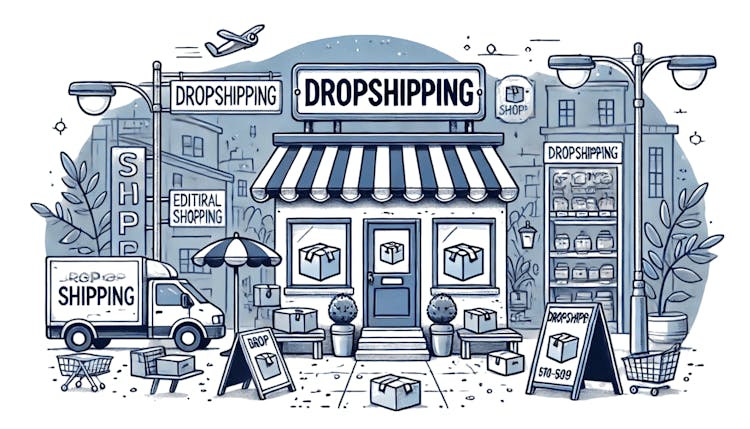
Confusion often surrounds the ideas of dropshipping and traditional e-commerce. Let us demystify these concepts and explore the distinct elements of each model. Dropshipping acts as a retail fulfilment system where the retailer does not hold stocks. Instead, when customers place orders, they are directly passed to a supplier who handles the dispatch. The seller concentrates on marketing and sales while delegating logistics. Conversely, E-commerce involves retailers owning and managing their stock supplies. Here, sellers oversee logistics, offering them greater control over deliveries and quality.
Crucial Differences:
Aspect |
Dropshipping |
E-Commerce |
|---|---|---|
Inventory |
Handled by suppliers |
Maintained by the retailer |
Startup Costs |
Moderate |
Substantial |
Control |
Limited, supplier-dependent |
Extensive, includes branding |
Scalability |
Stronger, but competitive |
Better for brand growth |
How Dropshipping and E-Commerce Function
Which approach—dropshipping or e-commerce—aligns with your business objectives?
Workflow of Dropshipping:
Select suppliers, using sources like AliExpress or Spocket.
Develop an online presence via platforms such as Shopify.
List and market products.
Suppliers fulfil customer orders directly.
This strategy doesn’t require product management but heavily relies on supplier quality and reliability.
Workflow of E-Commerce:
Buy stock in bulk.
Store products either at your facility or utilising services like Amazon FBA.
Manage dispatch, packaging, and returns personally or via couriers.
This path is resource-heavy but offers complete control over customer interactions and brand presence.
Weighing the Merits and Drawbacks of Dropshipping and E-Commerce
To decide whether dropshipping or e-commerce better aligns with your vision, it's crucial to scrutinise their strengths and weaknesses.
Dropshipping
Pros:
Minimal upfront investment and risk.
No storage or stockkeeping imperative.
Flexibility to adjust or add offerings.
Cons:
Narrower profit margins.
Reduced oversight on quality and shipping.
Dependency on third-party suppliers.
E-Commerce
Pros:
Ability to achieve higher profit margins.
Total management over quality and brand image.
Fosters customer loyalty through customisation.
Cons:
Considerable initial costs and financial exposure.
Involves labour-intensive logistics.
Profitability: Dropshipping vs E-Commerce
Are you driven by profit-making? Consider dropshipping vs e-commerce—determine which best meets your financial targets. Dropshipping can reward effective marketers selling cost-effective, in-vogue products in large quantities. Yet, it often yields slimmer margins (10-30%) due to reliance on supplier figures. E-commerce, while upfront capital may be hefty, results in more favourable margins (30-60%) as it allows for direct purchasing and brand curating. Sellers can promote product packages and elevate client loyalty for prolonged financial success.

Example Scenario
- Dropshipping: Sell 100 items with 15% profit margin = £1,500.
- E-Commerce: Sell 50 items with 50% profit margin = £2,500.
Deciding on Dropshipping or E-Commerce for Your Enterprise
Still at a crossroads on whether dropshipping or e-commerce fits your business plan? Follow these steps to find your way:
Analyse your budget: Are funds available for large stock orders, or do you prefer low-risk outlay?
Determine your availability: Capable of administration of logistics, or lean towards automated systems?
Value control: Do you require governance over consumer experience and branding?
Map your targets: Interested in short-term trials or long-lasting stability?
Recognise your client base: Does your market necessitate rapid delivery or custom goods?

Quick Questions to Ask Yourself
- What is your starting capital?
- Do you aim for seamless automation or practical control?
- Are you focusing on brand image or fast wins?