Business Trends 2026: What to Watch For
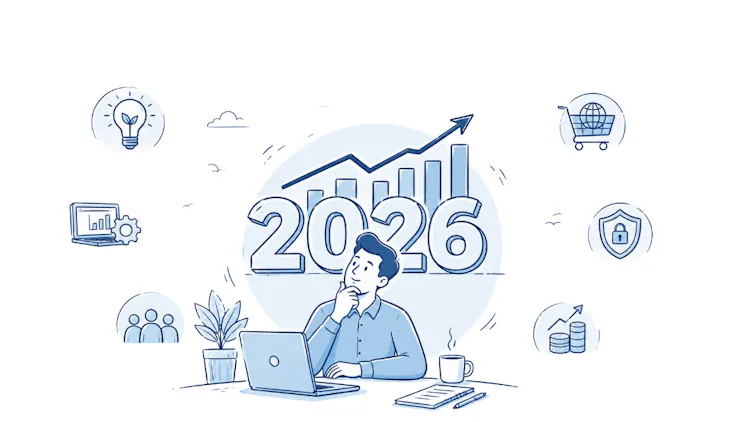
Why follow business trends
Those who keep an eye on market shifts have an advantage. You don't have to jump on every bandwagon, but knowing what's happening can help you make better decisions. Whether you're self-employed or running a small business, the following trends affect how you conduct business, communicate with customers, and work efficiently.
Artificial intelligence in everyday business
AI is no longer just for large corporations. By 2026, even small business owners commonly use it – for creating offers, responding to emails, analysing data, or automating invoicing. You don't need to be a tech expert. Just know which tools can save you time and where AI can help you make better decisions.

Start simple – try AI assistants for writing emails or generating web content. Even minor automation can save you hours each month.
The key is not to be afraid to experiment. AI tools are often available for free or at low cost, and even a complete beginner can handle their operation.
Sustainability as a competitive advantage
Customers are increasingly choosing companies based on their environmental conduct. Sustainability doesn't just mean being "green" – it means managing resources efficiently, minimising waste, and considering the impact of your business.
For small businesses, this can be a surprising advantage. A local supplier who focuses on minimal waste and transparent practices often gains more trust from customers than a large corporation with an elaborate CSR campaign.

Hybrid and flexible work as standard
The combination of office and remote work became the norm, not a perk, by 2026. For entrepreneurs, it means two things – adapting their working style and potentially offering flexibility to their collaborators or employees.

Flexibility attracts talent. A small company offering work from anywhere can compete with large employers who insist on office presence.
Personalisation and direct customer relationship
Large e-commerce sites personalise offers through algorithms. However, a small business owner has something an algorithm can't replace – a personal approach. Knowing your customer by name, remembering their preferences, offering exactly what they need.
In 2026, companies that combine technology with a human touch succeed. Automate routine, but keep personal contact.
Email marketing, loyalty programs, and personalised offers aren't just for big players. Available tools can be handled even by a one-person business.
Digitisation of administration
Paper invoices, manual records, and Excel spreadsheets are gradually becoming obsolete. Online tools for invoicing, accounting, and document management save time and nerves, reduce error risks, and help maintain an overview of finances in real-time.

According to surveys, more and more self-employed individuals are switching to digital tools for financial management. The main reasons are time-saving and reduced errors.
Conclusion:
The year 2026 brings opportunities for those willing to adapt. You don't need to respond to all trends at once – choose one or two that make sense for your business. Start where you're most held back. Spending hours on administration? Look into digital tools. Losing customers to competitors? Work on personalisation. Can't find collaborators? Try offering more flexible conditions. The key is not to stand still.
