Closing Your Business: Simple Steps to Stop Trading
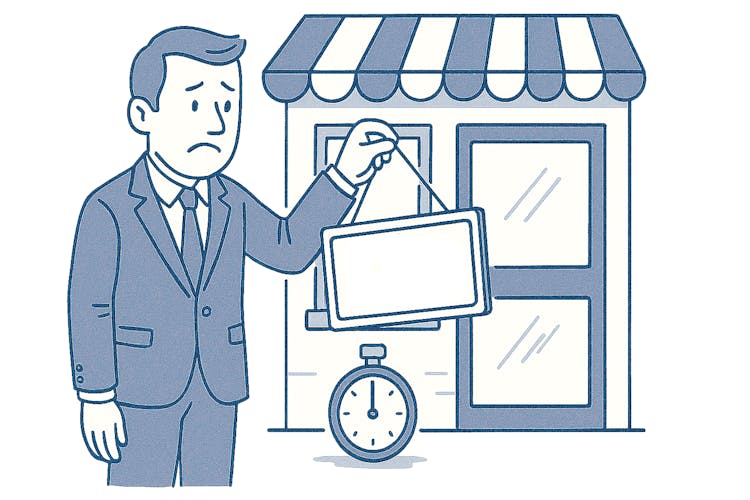
Notifying HMRC and Other Authorities
When you decide to stop being self-employed, the first step is to notify HMRC to ensure you are no longer responsible for submitting self-assessment tax returns. Failing to inform HMRC could result in continued tax obligations or penalties. It is crucial to provide HMRC with the exact date of your cessation.

Additionally, if your business is registered for VAT or you employ others under a PAYE scheme, you must notify HMRC separately about ceasing operations in these areas.
Notify HMRC
Your first step is to tell HMRC you've stopped being self-employed. You can do this through your Government Gateway account under the "Stop being self-employed" section. You'll need your National Insurance number and Unique Taxpayer Reference (UTR). Alternatively, you can call HMRC on 0300 200 3310.
If you work in the construction industry and are registered under the Construction Industry Scheme (CIS), call the CIS helpline on 0300 200 3210 instead.

Don't delay notifying HMRC. If they don't know you've stopped, they'll keep expecting tax returns from you — and you'll face automatic late filing penalties even if you had no income.
File Your Final Self Assessment
You must submit a final Self Assessment tax return for the tax year in which you stopped trading. This covers all income and allowable expenses up to your cessation date. Some closing costs — like phone or postage expenses for notifying customers — may count as deductible.

If you made a loss in your final year, terminal loss relief lets you set it against trading profits from the previous three tax years, potentially generating a tax refund.
National Insurance
You'll only owe National Insurance Contributions (NICs) for the period you were actually trading. HMRC calculates your final Class 2 and Class 4 NICs through Self Assessment.
Keep in mind that stopping NI contributions can create gaps in your record, which may affect your State Pension entitlement. If you're not moving straight into employment, consider making voluntary contributions to keep your record intact.
Closing a Partnership
The process for closing a partnership is similar to closing a sole trader business, but with a few extra steps. The nominated partner must submit a final partnership tax return, and each partner must then include their share of the partnership's profits or losses on their individual Self Assessment returns. All partners should notify HMRC that they've left the partnership.
If the partnership was VAT-registered or operated a PAYE scheme, those registrations need to be cancelled separately (see below).
Liquidation
If your company has significant assets to distribute or cannot pay its debts, dissolution won't be appropriate:
Members' Voluntary Liquidation (MVL) is for solvent companies where directors want a formal, tax-efficient way to distribute assets. This requires appointing a licensed insolvency practitioner and costs from around £2,000–£5,000+.
Creditors' Voluntary Liquidation (CVL) is for companies that cannot pay their debts. Again, an insolvency practitioner must be appointed. This protects directors from personal liability if done properly.

You don't have to close a limited company just because it's stopped trading. You can make it dormant instead — it stays on the Companies House register, but you notify HMRC it's not trading, and you won't need to file Corporation Tax returns. You'll still need to send annual accounts and a confirmation statement to Companies House.
Tax Obligations When Closing Any Business
Regardless of your business structure, there are several tax areas you need to address.
VAT Deregistration
If your business is VAT-registered, you must cancel your registration when you stop trading. You must do this within 30 days or risk a penalty. The quickest way is to cancel online through your Government Gateway VAT account. Alternatively, you can complete Form VAT7 and post it to HMRC. Confirmation usually takes around three weeks.
After cancellation, you must stop charging VAT immediately and file a final VAT return. If you still hold stock or assets on which you previously reclaimed VAT, and the total VAT due exceeds £1,000, you must account for it on that final return. All VAT records must be kept for at least six years after deregistration.
PAYE
If you employed staff, you need to close your PAYE scheme with HMRC. This involves submitting a final Full Payment Submission (FPS), issuing P45s to all employees, and settling any outstanding PAYE and NI liabilities.
Capital Gains Tax and Business Asset Disposal Relief
If you're selling or disposing of business assets, you may need to pay Capital Gains Tax (CGT). However, you might qualify for Business Asset Disposal Relief (BADR), which reduces the CGT rate on qualifying gains up to a £1 million lifetime limit. The BADR rate is currently 14% for the 2025/26 tax year, rising to 18% from 6 April 2026. Without BADR, the standard higher-rate CGT is 24%.
Keep Your Records:
Even after your business is closed, you're legally required to hold onto your records for a set period:
Sole traders and partnerships: at least 5 years after the 31 January submission deadline for the relevant tax year.
Limited companies: at least 6 years from the end of the last accounting period.
VAT records: at least 6 years after deregistration.
PAYE records: at least 3 years after the end of the tax year they relate to.
Professional Guidance and Support
Navigating the complexities of ceasing self-employment can be overwhelming, particularly when balancing tax obligations, asset management, and legal responsibilities. Engaging professional services, such as accountants or tax advisors, can alleviate some of this burden.
Conclusion
Properly managing the cessation of self-employment involves careful attention to tax obligations, National Insurance contributions, and communication with HMRC. Ensuring that all necessary steps are taken can prevent financial complications and streamline the transition out of self-employment. It is always advisable to seek professional advice if you are uncertain about any aspect of the process, particularly in cases involving complex tax issues such as overlap relief and post-cessation expenses.