Ideal Invoice Number Length Explained
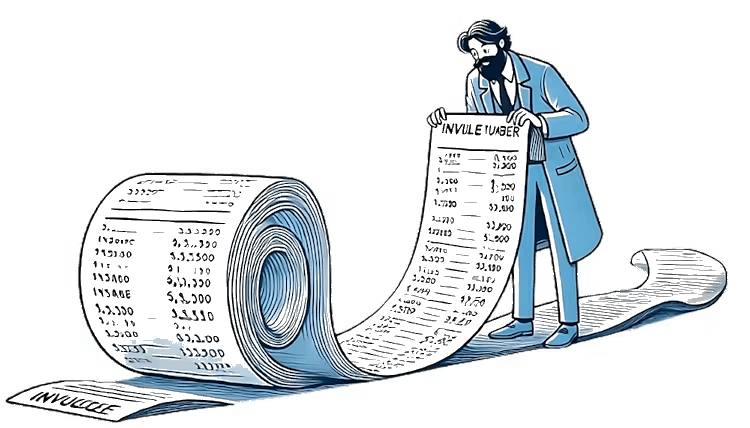
Understanding the appropriate length for an invoice number is critical for strategic planning in financial management. It's not simply about using a lengthy number, but adopting a system that anticipates future growth without frequent alterations. This adaptability is crucial for businesses in the UK.
Invoice numbers play a crucial role in financial dealings by serving as identifiers for transactions. They ensure each sale can be tracked and referenced effortlessly, which is essential for managing any business’s books.
Why Invoice Number Length Matters
- Acts as a legal and tax proof of sales
- Assists with efficient management and organisation of financial records
- Key for tracking customer payments and outstanding amounts
A frequently asked question is regarding the length an invoice number should have. Although there's no one-size-fits-all rule, here’s a sensible way to approach it.
Common Standards for Invoice Numbers
Starting an invoice number with '0001' suggests a lower transaction volume, whereas commencing at '10000' indicates a high sales volume, presenting a more professional business image. This setup could support up to ten million transactions before requiring alteration.
The impact of choosing your invoice number’s length extends beyond basic organisation.
Effects of Invoice Number Length
- A longer sequence helps minimise errors in high transaction volumes
- Enables detailed tracking and reporting of transactions
- Facilitates coding systems for easy recognition of transaction types and dates
As your UK business expands, the scalability of financial systems becomes paramount.
Solutions like provide diverse invoicing and tracking options, ensuring your systems grow alongside your business.
Maintaining the integrity of invoice numbers is also pivotal in thwarting fraudulent practices.
Preventing Fraud: The Importance of Invoice Number Digits
Incorporating both letters and numbers in your invoice system can make it harder to forge, thus supporting transaction authenticity.
Invoice numbers significantly contribute to financial reporting as well.
Financial Reporting and Invoice Number Length
- Enables precise matching of invoices with received payments
- Facilitates smoother audit trails for internal and external examinations
- Improves the transparency and reliability of financial records
Here are some practical suggestions for designing an efficient invoice numbering system.
Designing an Ideal Invoice Number System
Begin with a structure ready for expansion - if your business anticipates growing rapidly, opt for a longer numbering sequence to avoid reformatting in the future.
Selecting the right number of digits and understanding its importance can prevent potential challenges. A well-thought-out invoice numbering system can simplify business practices and support financial health efficiently.
