Understanding Invoices and Quotes
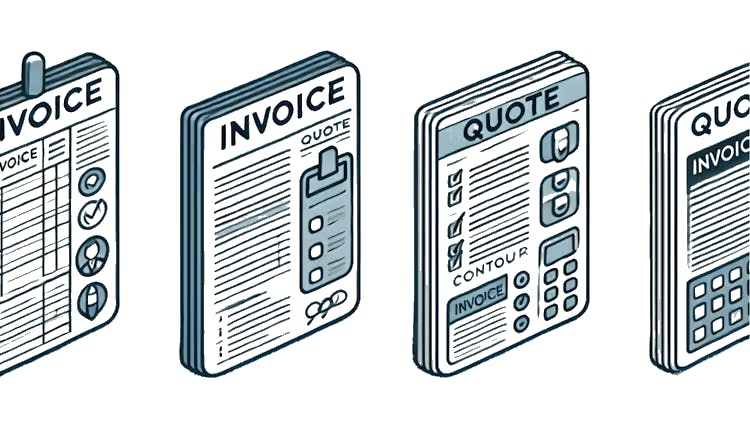
When to Use Invoices and Quotes in Business Transactions
In business dealings, deciphering between invoices and quotes is essential. Primarily, an invoice is a request for payment once goods or services are delivered. Conversely, a quote lays out the anticipated costs before any agreement is finalised.
Differentiating Invoices from Quotes
Understanding these documents is crucial for smooth business operations. Common yet distinct, invoices and quotes serve different purposes despite some confusion. Here's how they differ:
- A quote offers a preliminary cost estimation before a deal is sealed, generally used at the introductory stage of negotiations.
- An invoice, issued after fulfilment, formalises the request for payment and details what is due.
Legalities: Invoices Versus Quotes
Beyond paperwork, the legal distinctions are significant. Quotes act as an informal proposal without binding obligations. In contrast, invoices serve as lawful affirmations that a payment is required for services rendered. Should payments falter, an invoice becomes pivotal in legal recourse.
Effective Client Communication About Invoices and Quotes
Clear dialogue with clients mitigates potential misunderstandings.
Example: When presenting a quote for graphic design work, clarify it is an approximation subject to design approval. Once confirmed, an invoice will subsequently formalise the payment request post-delivery.
Tip: Employ straightforward language, steering clear of complex terminology to ensure clarity for your clients.
Optimising the Management of Invoices and Quotes
Consistency in documentation is vital for reliable financial handling. Both quotes and invoices should include:
- Distinctive reference number
- Issuance date
- Comprehensive description of goods or services
- Statement of anticipated (quote) or actual (invoice) costs
Enhance invoicing processes using tools like InvoiceOnline, which facilitates the seamless creation of invoices directly online. Implementing a tracking system ensures accurate record-keeping, strengthening client confidence and business reputation. Regular reconciliation of these documents with service delivery records expedites the resolution of discrepancies.
Accurately distinguishing between invoices and quotes and applying this understanding enhances transactional efficiency and clarity, reinforces legal stances, and fosters transparent client interactions. Mastering these essentials equips you with a professional edge in the bustling business landscape of the United Kingdom.
