How to Get Back into the Swing of Work After the Summer
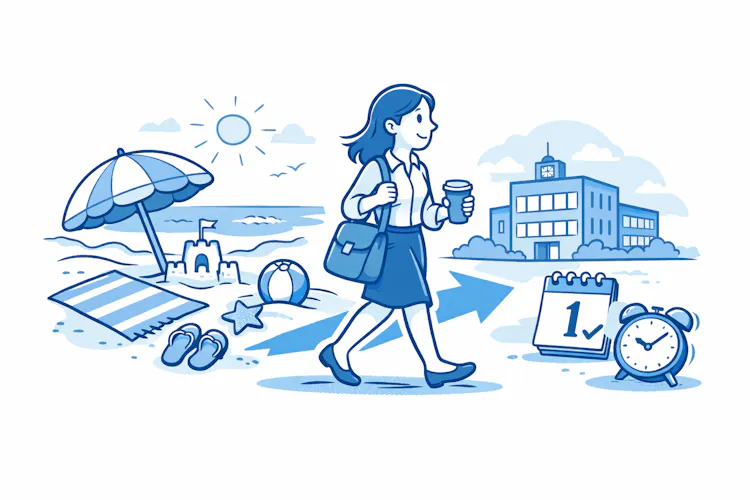
Getting back to full speed after a few weeks off is like jumping onto a moving train. It's less about how much work there is than the change of pace. The steps below help you handle that switch so the first day back doesn't floor you.
Why the first day back is such a shock
After a few weeks off, your body and mind fall out of the work rhythm. Priorities have shifted in the meantime, colleagues have dealt with things without you, and your head is still more beach than backlog. This slump even has a name — people call it the post-holiday blues. It's not laziness or failure, just a normal reaction to an abrupt change of pace. And the good news: you can plan for it in advance.
Plan your return before the holiday ends
Ten minutes of planning before you go saves you a chaotic first morning. Jot down three things that need doing as soon as you're back, and leave the rest for later. You'll come back to a clear list instead of a blank head and two hundred unread emails.
If you can, give yourself one extra day off between the end of your holiday and your first day back. The difference between "home Sunday night, full speed Monday morning" and "home Saturday, a day to unpack and breathe" is huge. That one day often decides whether you just survive the first week or actually function.

Treat the first days as a warm-up, not full throttle
Trying to catch up on everything the first day is the quickest route to burning out right at the start. Your brain won't hit the same pace after a break as before it, and that's fine. Start with tasks that don't need much focus — sorting, admin, finishing work you left open before you went. Save difficult decisions and creative work for the second or third day, once you're back up to speed.

Rebuild your routine gradually
Sleep is the first thing summer throws off — late nights, different time zones, no alarm. A few days before you're back, start going to bed and getting up closer to working hours. A small morning routine from before the break helps too: coffee, a short walk, fifteen minutes to plan the day. That tells your body it's time to switch back on.
Back to work as a sole trader: what not to forget
An employee returns to work in progress; as a sole trader you also come back to whatever built up on the admin side over the summer. Deadlines don't pause for time off — so the first thing to check is that nothing slipped while you were away. If you're VAT registered, your VAT return keeps its deadline through the summer, and any payment on account for Self Assessment has its own date too.
The second thing is cash flow. Over the weeks you didn't invoice, income naturally drops. Go through what hasn't been billed yet, bring your records of invoices and expenses up to date, and get back to the clients you put off "until after the holidays." The sooner your invoices go out, the sooner the money comes in.

How long does it take to get back up to speed after a holiday?
Usually a few days to a week. After a longer break your brain eases back into full focus gradually, so treat the first days as a warm-up and don't expect a hundred percent straight away.
What is the post-holiday blues?
It's the slump and reluctance to work after coming back from a longer break. It's a normal reaction to the abrupt change of pace, not a sign that something is wrong with you. It usually passes within a few days.
How do I make my first day back after a break easier?
Plan it before your holiday ends and write down three things that need doing right away. Keep the first day for clearing your inbox and finishing open work, and push demanding meetings and decisions to later.
Do my obligations as a sole trader carry on while I'm on holiday?
Yes. Your VAT return and any Self Assessment payment on account keep their deadlines regardless of your holiday, and National Insurance is settled through Self Assessment rather than monthly. When you're back, check that nothing slipped by over the summer.
What should I watch out for as a sole trader after a holiday?
Mainly the deadlines that kept running over the summer — your VAT return if you're registered, and any Self Assessment payment on account. And cash flow: bill what built up as soon as you can so income starts coming in again.