Understanding AI and ML: Key Differences
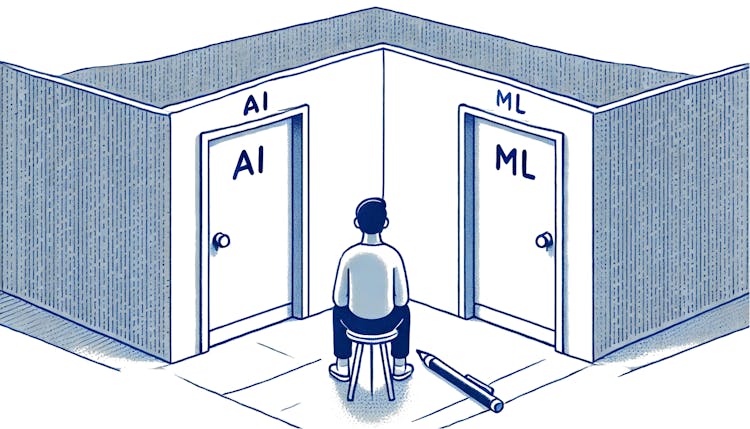
The domain of artificial intelligence (AI) encompasses the creation of systems that attempt to mimic human-like understanding, decision-making, and communication abilities. Within the vast landscape of AI, machine learning (ML) stands out as a component prioritising self-improvement through data-driven learning.
Comparison Table
Aspect |
Artificial Intelligence (AI) |
Machine Learning (ML) |
|---|---|---|
Definition |
Simulates human intellect for decision-making and more. |
Utilises data to learn and forecast outcomes. |
Scope |
Spans various approaches including robotics and natural language processing. |
A specific focus within AI on learning from data. |
Key Objective |
Creates systems that resemble human thinking and action. |
Trains algorithms to recognise patterns and improve accuracy. |
Approach |
May use rule-based systems, robotics, or ML strategies. |
Dependent on data and statistical models. |
AI and ML: Core Differences
AI and ML markedly differ in scope, intent, and utilisation. AI aims to forge intelligent behaviours in systems, whereas ML hones in on crafting algorithms that adapt through data insights.
AI systems might function without ML, leaning on established methods like decision-making trees or rule-based logic. Conversely, ML empowers systems to refine actions via pattern recognition in historical data. For instance, a fraud detection AI system utilises an ML module to generate predictive suspicions.
Key distinction: AI = Objective-focused; ML = Data-focused.
Main Characteristics of AI vs. ML
Artificial Intelligence Characteristics
Objective: Imitates human cognitive processes for decision-making.
Capabilities: Manages reasoning, perception, and adaptability tasks.
Methods: Integrates ML with automated or encoded systems.
Machine Learning Characteristics
Objective: Uses data to enhance predictive accuracy.
Processes: Encompasses supervised, unsupervised, and reinforcement learning.
Speciality: Entirely depends on datasets for training, like recommendation systems.
The Importance of Understanding AI and ML
Grasping AI and ML differences ensures effective utilisation across sectors. Businesses should determine if they require broad automation (AI) or data-dependent systems like a machine learning chatbot that evolves with context.
This comprehension avoids misguided expectations and supports informed tech investments. As AI and ML revolutionise domains such as finance and healthcare, understanding their roles equips individuals and organisations for cutting-edge opportunities in the UK and beyond.

Tip
Consider business objectives to choose between AI (automation) or ML (data models) for the best results.
Is AI Possible Without ML?
Indeed, AI can exist independently of ML. Traditional AI paradigms, like expert systems and rule-driven chatbots, rely on symbolic reasoning and pre-programmed logic rather than flexible models. Older AI systems, like chess strategies, typify this approach.
These techniques are inflexible compared to the adaptability ML offers. Although ML enhances AI, it's not mandatory for AI to function intelligently.
Conclusion: Connecting AI and ML
AI acts as the umbrella for creating intelligent behaviour, while ML is the mechanism for crafting smarter systems through data learning. Recognising this distinction allows businesses and individuals to apply these technologies effectively, foreshadowing a future ripe with innovation in an AI-driven world.
