Comprehensive Guide to Parental and Family Leave
What is Parental Leave?
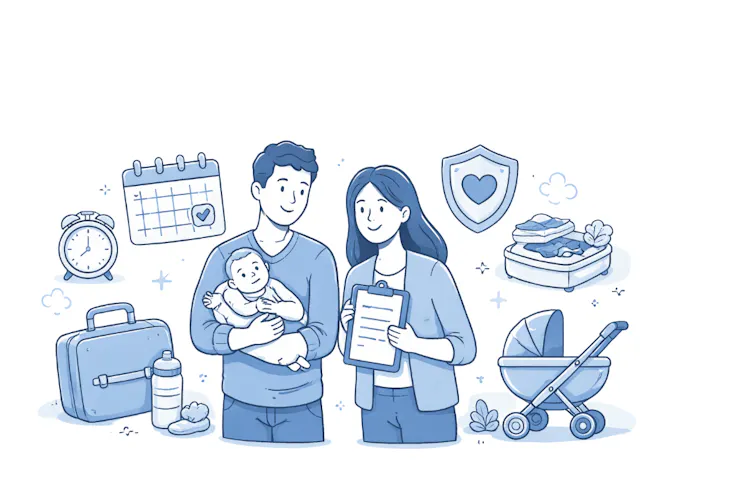
Parental leave refers to the right of employees to take unpaid time off to care for their children. It complements other statutory leaves such as maternity, paternity, and adoption leave. Common reasons for taking parental leave include:
Managing disruptions in childcare arrangements;
Spending quality time during school holidays;
Supporting a child’s medical needs or school events.

Major change from 6 April 2026:
Parental leave becomes a day-one right. You no longer need 12 months of continuous service with your employer to qualify. This change is part of the Employment Rights Act 2025.
Eligibility Criteria
To qualify, individuals must:
Be classified as employees.
Hold parental responsibility through legal documents like a birth or adoption certificate.

Previously, you also needed at least one year of continuous employment with your employer. From April 2026, this qualifying period has been removed entirely.
Key Provisions
Parents are entitled to 18 weeks of unpaid leave per child, usable in weekly blocks up to four weeks per year. For children with disabilities, leave can be taken in smaller increments if eligibility criteria such as receiving Disability Living Allowance are met.
Parental leave is attached to the child, not the job. If you change employers, your unused leave carries over — you don't start from scratch.
Maternity Leave and Pay
Women are entitled to 52 weeks of Statutory Maternity Leave, split into 26 weeks of Ordinary Maternity Leave and 26 weeks of Additional Maternity Leave. During this time, eligible employees receive Statutory Maternity Pay (SMP) for up to 39 weeks:
First 6 weeks: 90% of your average weekly earnings (no upper cap);
Remaining 33 weeks: £187.18 per week or 90% of average weekly earnings, whichever is lower (2025/26 rate).

New rates from April 2026:
The flat rate for SMP (weeks 7–39) increases to £194.32 per week. The minimum earnings threshold also rises from £125 to £129 per week.
Paternity Leave and Pay
Fathers and partners can take one or two weeks of Statutory Paternity Leave. Since April 2024, this leave can be taken in two separate one-week blocks at any point within the first 52 weeks after birth, rather than as a single block in the first 8 weeks.
Statutory Paternity Pay is £187.18 per week or 90% of average weekly earnings, whichever is lower (rising to £194.32 from April 2026).
Shared Parental Leave (SPL)
SPL offers families flexibility by enabling parents to share up to 50 weeks of leave and 37 weeks of pay after the first two weeks following childbirth. This allows parents to alternate or take leave simultaneously.
Neonatal Care Leave
Parents whose newborn requires specialist medical care — for example, premature babies or those with health complications — are entitled to up to 12 weeks of additional paid leave. This is a day-one right (no qualifying period). Statutory Neonatal Care Pay is £187.18 per week (rising to £194.32 from April 2026).

Around 60,000 families per year are estimated to benefit from neonatal care leave, which was introduced through the Neonatal Care (Leave and Pay) Act 2023 and came into effect in April 2025.
Returning to Work
After parental leave, employees are entitled to return to their original job. If they take more than four weeks or combine leaves, they may be offered a similar role with equivalent terms.
Protection Against Detriment
Employers cannot dismiss or penalize employees for exercising their right to parental leave. Examples of prohibited actions include:
Reducing work hours without agreement.
Denying promotions or training opportunities without valid reasons.
Harassment or bullying related to leave requests.
Financial Support and Additional Benefits
Healthy Start
If you're pregnant (from 10 weeks) or have a child under 4 and receive certain benefits, you can get a Healthy Start prepaid card to spend on fruit, vegetables, pulses, milk and infant formula. The amounts are:
£8.50 per week for each child under 1;
£4.25 per week for each child aged 1–3;
£4.25 per week if you're pregnant.
You need to be receiving Universal Credit (with family earnings of £408 or less per month), Income Support, Jobseeker's Allowance or Child Tax Credit. Pregnant women under 18 qualify automatically.
Sure Start Maternity Grant
This is a one-off, tax-free payment of £500 towards the costs of a new baby, available in England, Wales and Northern Ireland. To qualify, you or your partner must be receiving certain benefits (Universal Credit, Income Support, Pension Credit, etc.) and usually have no other children under 16. For twins or triplets, you may receive £500 per additional baby. In Scotland, the equivalent is the Best Start Grant, which is more generous and structured differently.
Universal Credit
If you're on a low income, Universal Credit can provide ongoing financial support during pregnancy and after the birth. Your entitlement is recalculated once your household circumstances change.
Free NHS Prescriptions and Dental Care
Pregnant women and new mothers are entitled to free NHS prescriptions and NHS dental care during pregnancy and for 12 months after giving birth. You'll need a Maternity Exemption Certificate (MATEX) — ask your midwife or GP to apply on your behalf.
Make sure you get your MATEX as early as possible. Without a valid certificate, you may have to pay upfront and claim a refund — and refunds can only be claimed if you ask for a receipt (form FP57) at the time of payment.
Conclusion
Understanding and utilizing parental leave policies and benefits can significantly ease the challenges of balancing work and family life. Employers and employees alike benefit from clear communication and mutual flexibility. By knowing their rights and planning effectively, parents can foster both professional and personal well-being.
