Enhance Idea Organisation with Mind Mapping
Understanding the Mind Map Approach
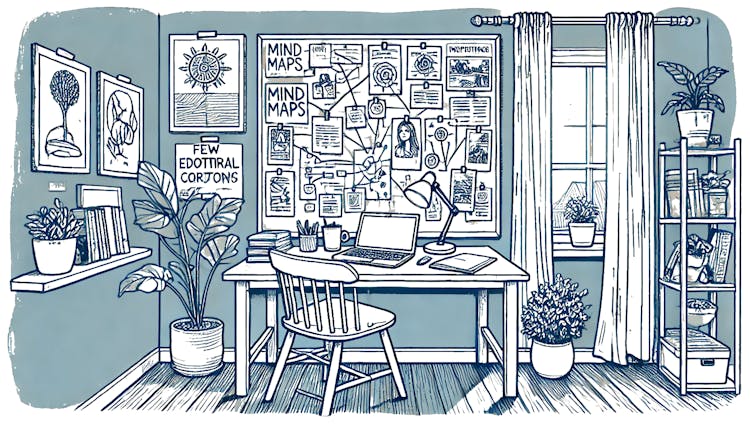
The mind map approach is a brilliant way to organise thoughts and ideas in a visual format. Imagine starting with a central notion, then branching out to related ideas, much like a tree's branches. This method, using keywords, symbols, and visuals, reflects how our minds instinctively connect thoughts, thus encouraging creative and flexible thinking. Whether you are brainstorming, project planning, or solving problems, mind mapping is a vibrant and engaging method to organise your information.
A mind map is an illustration used to visually organise information around a central theme.
The Effectiveness of Mind Mapping for Organising Ideas
Have you ever been overwhelmed with ideas and struggled to make sense of them? The mind map technique captures relationships visually, structuring information logically while aiding memory retention.
Creating a mind map allows disparate ideas to connect unexpectedly, presenting a clear, overall view of your subject. By categorising ideas into branches and sub-branches, you escape the linear restrictions of other methods, promoting inventive thinking.
Advantages of Using Mind Maps:
Reveals connections between seemingly unrelated ideas.
Highlights priorities with clear visual structuring.
Enhances visual learning, improving memory and recall.
Compelling Reasons to Employ Mind Mapping
Sparks Creativity: Its non-linear format encourages free association, helping you to think outside the box.
Boosts Productivity: A structured overview cuts through mental fog, simplifying task management.
Simplifies Complex Topics: Mind maps offer both comprehensive views and detailed breakdowns for better understanding.
Recommended Tools for Creating Mind Maps
Crafting mind maps has never been easier, thanks to various tools:
Pen and Paper: Ideal for hands-on brainstorming with vivid markers.
Digital Platforms: Tools like MindMeister, XMind, and Canva provide templates and collaborative features.
Software Integration: Use Notion, PowerPoint, and Google Drawings to embed mind maps into presentations.
Mobile Applications: Apps such as SimpleMind and iThoughts enable creative map-making on the go.
Step-by-Step Guide to Mastering Mind Mapping
Guided Steps:
Select a Central Concept: Place the main idea prominently at the centre of your workspace.
Establish Main Branches: Develop branches representing core ideas linked to the central topic.
Add Detail Sub-Branches: Expand your branches with specific examples or supporting points.
Utilise Visual Elements: Spruce up your map with colours, shapes, or images for emphasis.
Review and Enhance: Reassess your mind map to remove redundancies and underscore crucial details.

Pro Tip
Start with one central idea and expand, keeping your map concise and visually appealing.
In Conclusion: Unlock Your Creative Potential with Mind Maps
Mind maps are straightforward yet transformative instruments for organising concepts and unleashing creativity. Whether you're a student in the UK, a professional, or someone wanting to clear mental space, this approach can significantly impact. Test different tools and styles with a small-scale project to experience the benefits. Start mapping today and unlock your potential!
