Tackling Procrastination Linked with Perfectionism
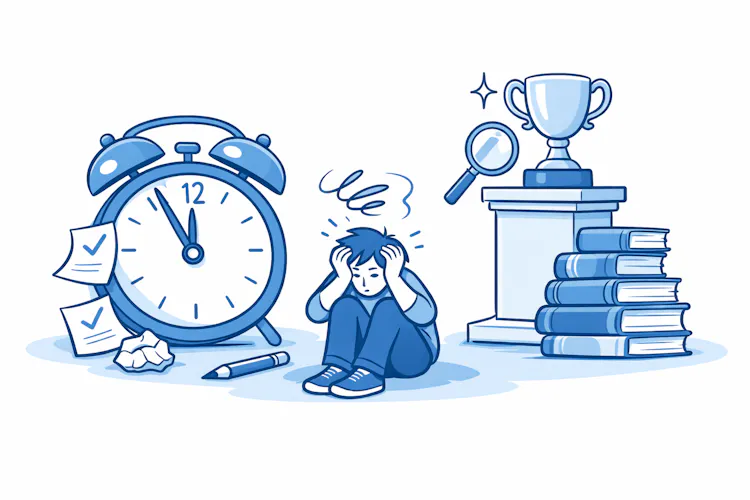
Why Perfectionists Put Things Off
Procrastination means pushing a task off even when you know it'll cost you. For a perfectionist, the reason usually isn't laziness. It's fear. Fear that the result won't be good enough.
When everything has to be flawless, starting suddenly feels risky. A rough first draft hurts more than a blank page, so you wait. You'll do it "properly" once you have the time, the energy and the perfect plan. That moment never quite arrives.
It's a trap: the higher you set the bar, the more pressure you feel, and the easier it is to push the work aside. Putting it off brings relief for a few hours, then more guilt. And the guilt raises the bar even higher.
Not All Perfectionism Is the Same
The distinction matters. Healthy striving means you hold high standards but can live with a mistake. Unhealthy perfectionism treats a mistake as a disaster and runs largely on worry about what other people will think.
Procrastination is driven mostly by that second kind. High standards on their own don't cause it. The problem is fear of mistakes and of being judged, not the fact that you care about the outcome.

What It Looks Like in Practice
For a freelancer or small business owner, it shows up in concrete ways:
You rewrite a client proposal five times, even though the first version was fine.
You don't launch your website or shop because "it isn't ready yet."
You send an invoice late because you want a perfect overview first.
You spend ages "getting ready" before every task, but never start.
The result isn't better work. It's late payments, lost jobs and more stress.

Example
What to Do About It
-
Define What "Done" Means
Before you start, decide when the task is finished. For a proposal, that might be: readable, correct numbers, sent by Friday. Not "perfect." When you have a target, you know when to stop.
-
Separate Creating From Editing
Write or build a rough first version first, and save the criticism for later. When you edit and create at the same time, you get nowhere.
-
Break the Task Into Small Steps
A big task is daunting. "Send the invoice for this project" is doable. "Sort out all my bookkeeping" will floor you. A smaller step is harder to put off.
-
Set a Time Limit
Try working in blocks — say, 25 minutes at a stretch. A limited window naturally takes the pressure off perfection, because you simply have to produce something.
-
Go Easier on Yourself
Harsh self-criticism makes procrastination worse. When you beat yourself up after putting something off, you feel worse and put it off again. A kinder approach actually lowers avoidance.

When It's More Than a Bad Habit
Everyone puts things off now and then. But if the pressure to be perfect leads to constant anxiety, trouble sleeping or burnout, it's not just about willpower or better planning. In that case it's worth talking to a professional. That's not failure, it's a sensible move.

Is perfectionism always a bad thing?
No. Healthy striving for quality helps you. The problem is the unhealthy version driven by fear of mistakes and of others' judgement, because that's what leads to avoidance.
Why do I procrastinate most on the important tasks?
The more a task matters, the bigger the fear of an imperfect result, and the stronger the urge to push it off. Small, unimportant things are harder to avoid because there's less at stake.
How do I know if I'm procrastinating out of perfectionism rather than laziness?
With laziness, you don't want to do the task. With perfectionist procrastination, you do want to do it, and that's exactly why you don't start. It usually comes with worries like "what if it isn't good enough?"
Does the “good enough” approach work for jobs where quality really matters?
Yes. "Good enough" doesn't mean cutting corners. It means a sensible bar and finishing, instead of endless tweaking that gets you nowhere anyway.
Do deadlines help?
An external deadline eases the pressure to be perfect, because suddenly done matters more than perfect. Artificial deadlines work less well, but breaking a task into steps with their own smaller deadlines helps.