Workplace Bias: Tackling Discrimination and Favouritism
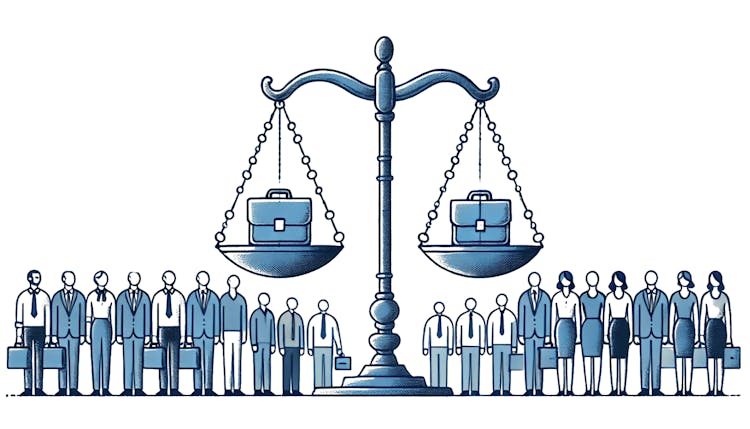
The presence of bias in the workplace, whether through discrimination or favouritism, manifests as unjust treatment towards individuals. Discrimination is often based on inherent traits such as race or gender, whereas favouritism stems from personal affinities or prejudices. To effectively address these challenges, it's crucial to first acknowledge their existence, then establish solid policies, encourage transparency, and cultivate an inclusive atmosphere. However, achieving lasting change necessitates a deeper understanding of the interconnected psychological effects and contextual dynamics.
Distinguishing Between Discrimination and Favouritism at Work
Grasping the essence of discrimination versus favouritism in the workplace is vital. Discrimination involves treating individuals unfavourably due to factors like ethnicity, gender, or age and often requires systemic solutions. Conversely, favouritism involves preferential treatment influenced by subjective relationships or biases, disregarding competence.
Example: Discrimination might show when a competent employee is overlooked for a promotion in favour of someone less qualified due to gender bias. Meanwhile, favouritism could occur when a manager opts for a friend for a coveted project, sidelining more deserving team members.
Understanding these dynamics helps in pinpointing and mitigating such issues. Spotting patterns that suggest collusion allows one to determine whether the bias is systemic, indicating discrimination, or individual, hinting at favouritism. Conversations around workplace fairness must be underpinned by evidence and clear intentions, enhancing dialogue between staff and management.
The Psychological Toll of Bias
Experiencing discrimination or favouritism at work can elevate stress, induce anxiety, and lower job satisfaction, ultimately damaging self-worth. Employees may feel isolated or undervalued, impacting both their mental and physical health.
Example: When employees are perennially passed over due to favouritism, team cohesion falters, diminishing morale and productivity.
Feelings of depression and anxiety linked to perceived injustices.
Reduced motivation coupled with dissatisfaction at work.
Breakdowns in trust and collaboration.
Long-term negative mental health outcomes.
Addressing these practices involves nurturing an atmosphere emphasising emotional intelligence. Providing platforms for employees to raise grievances without fear encourages early identification of problems. Emotional intelligence aids in understanding and managing workplace stress, improving individual and team resilience.
Countering Discrimination and Favouritism
To counter discrimination and favouritism at work requires strategic organisational shifts. Here are steps to tackle these biases:
Create explicit guidelines: Draft comprehensive policies defining unacceptable behaviours, reinforced through regular training.
Tip: Routinely review policies to keep them relevant to evolving workplace dynamics.
Invest in workshops that extend beyond skills to address implicit bias and emotional understanding.
Foster a feedback-oriented culture: Establish channels for both anonymous and open employee feedback to discern underlying sentiments.
Tip: Utilise feedback constructively to form action plans, paving ways for workplace improvements.
Facilitate open dialogue: Ensure communication flows freely at all organisational levels.
Example: Hosting regular forums where employees can voice concerns, ensuring they are central to discussions on corporate culture.
Fostering an Inclusive Culture
Building an inclusive culture significantly decreases bias instances within the workplace. Engaging employees in crafting a culture where diversity and equity are imperative encourages practices celebrating varied backgrounds and contributions.
Conduct regular sessions on diversity and inclusion-related topics.
Offer incentives for effective teamwork and collaborative initiatives.
Implement transparency in decision-making processes.
Maintain continuous training on inclusive practices.
Tip: Periodically assess the success of inclusivity programmes through feedback and surveys, adjusting strategies as required.
Executing these strategies requires dedication across the organisational hierarchy. By identifying and combatting workplace bias, companies can evolve into more effective, harmonious environments that benefit all employees.