Overdue Invoice: What to Do When a Client Hasn't Paid

An invoice is overdue the first day after the due date passes and the money still isn't in your account. From that point, UK law gives you a clear set of rights — and on business-to-business invoices they apply automatically. The sooner you act, the better your chances of getting paid.
When is an invoice overdue?
The due date on the invoice decides it. If you didn't agree a date, payment is due within 30 days of the invoice or of receipt of the goods or services, whichever is later. A shorter or longer period is fine, but it needs to be agreed — and between businesses the term shouldn't exceed 60 days unless that's genuinely fair to you as the supplier.
The day after the due date, the payment is late and statutory interest starts to run. You don't need to have mentioned it in your contract or on the invoice — the right comes straight from the law.
What you can claim
When a business client pays late, you can claim more than just the invoice amount:
Statutory interest — 8% above the Bank of England base rate, on business-to-business invoices. It's simple interest (it doesn't compound) and runs from the day after payment was due.
Fixed compensation — a set sum per overdue invoice to cover the cost of chasing the debt: £40, £70 or £100 depending on how much is owed. If your actual recovery costs are higher, you can claim the reasonable difference on top.
These rights are automatic under the Late Payment of Commercial Debts (Interest) Act 1998. They apply to business-to-business (and public authority) invoices — not to consumers. If your customer is an individual buying in a personal capacity, you'd rely on your contract terms instead.

Claiming on an overdue B2B invoice (UK, 2026):
• Statutory interest: 8% above the Bank of England base rate. With the base rate at 3.75%, that's 11.75% a year. Simple interest, starting the day after payment was due.
• The rate is fixed in six-month blocks, based on the base rate on 30 June and 31 December.
• Fixed compensation per invoice: £40 (debt up to £999.99), £70 (£1,000–£9,999.99), £100 (£10,000 or more).
• You can also claim reasonable recovery costs above the fixed sum. Automatic under the Late Payment of Commercial Debts (Interest) Act 1998 — it applies even if your contract is silent, but only to B2B invoices, not consumers.
The base rate changes, so check the current figure.

A client owes you £5,000. The invoice was due on 10 February 2026 and they paid on 21 April 2026 — 70 days late.
At 11.75% statutory interest: £5,000 × 11.75% × 70 ÷ 365 = £112.67.
The debt sits in the £1,000–£9,999.99 band, so you can add £70 fixed compensation.
That's £182.67 on top of the invoice.
How to chase it, step by step
Check the invoice. Make sure it reached the client and the details are right. Payments often stall over a wrong account number or a missing reference.
Send a reminder. The first is usually a polite nudge that the invoice is overdue. If there's no response, follow up more firmly, setting out the interest and compensation you're entitled to.
Send a Letter Before Action. If reminders don't work, this formal letter states the amount owed, the interest and costs, and a final deadline to pay before you go to court.
Make a court claim. For most unpaid invoices you can claim online through Money Claim Online; the court can then order the debtor to pay.
Statutory interest and compensation are automatic, so you don't need a clause in your contract to claim them — though clear payment terms still make chasing far easier.

Handling overdue invoices in MyInvoiceOnline
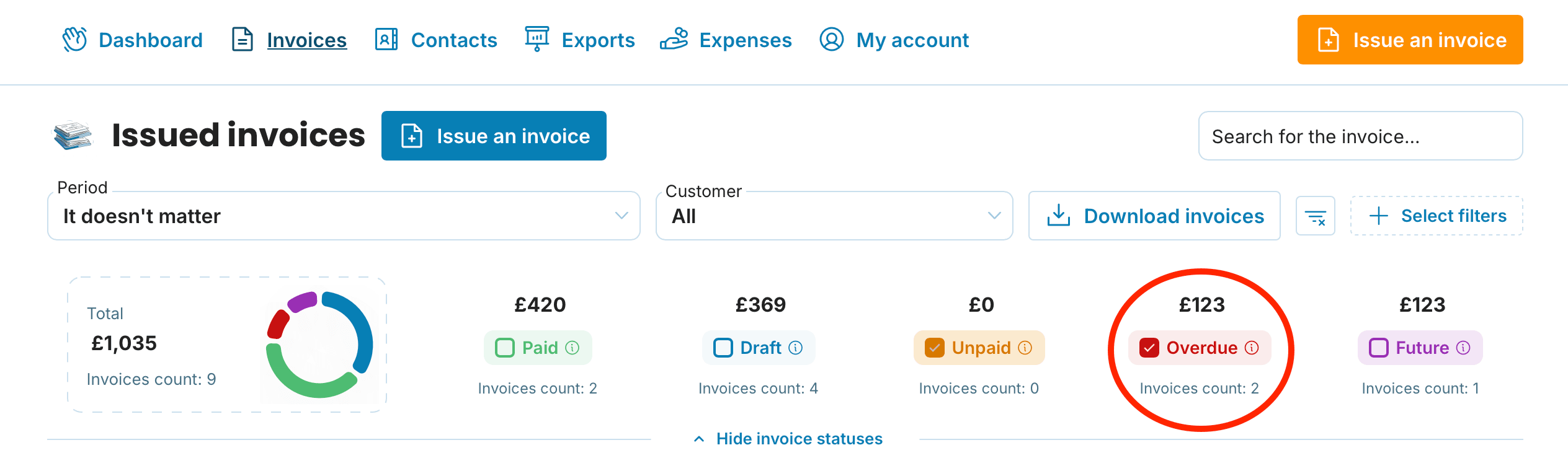
In MyInvoiceOnline, an overdue invoice is easy to spot — filter your invoice list by status to see exactly which ones need attention.
When an invoice is overdue, you can send a reminder straight from the app. A ready-made template is available, so you just fill it in and send instead of writing the reminder from scratch every time.
How to do it:
Next to the invoice, click the send icon.

A reminder window opens — fill in the recipient and edit the text if you like.
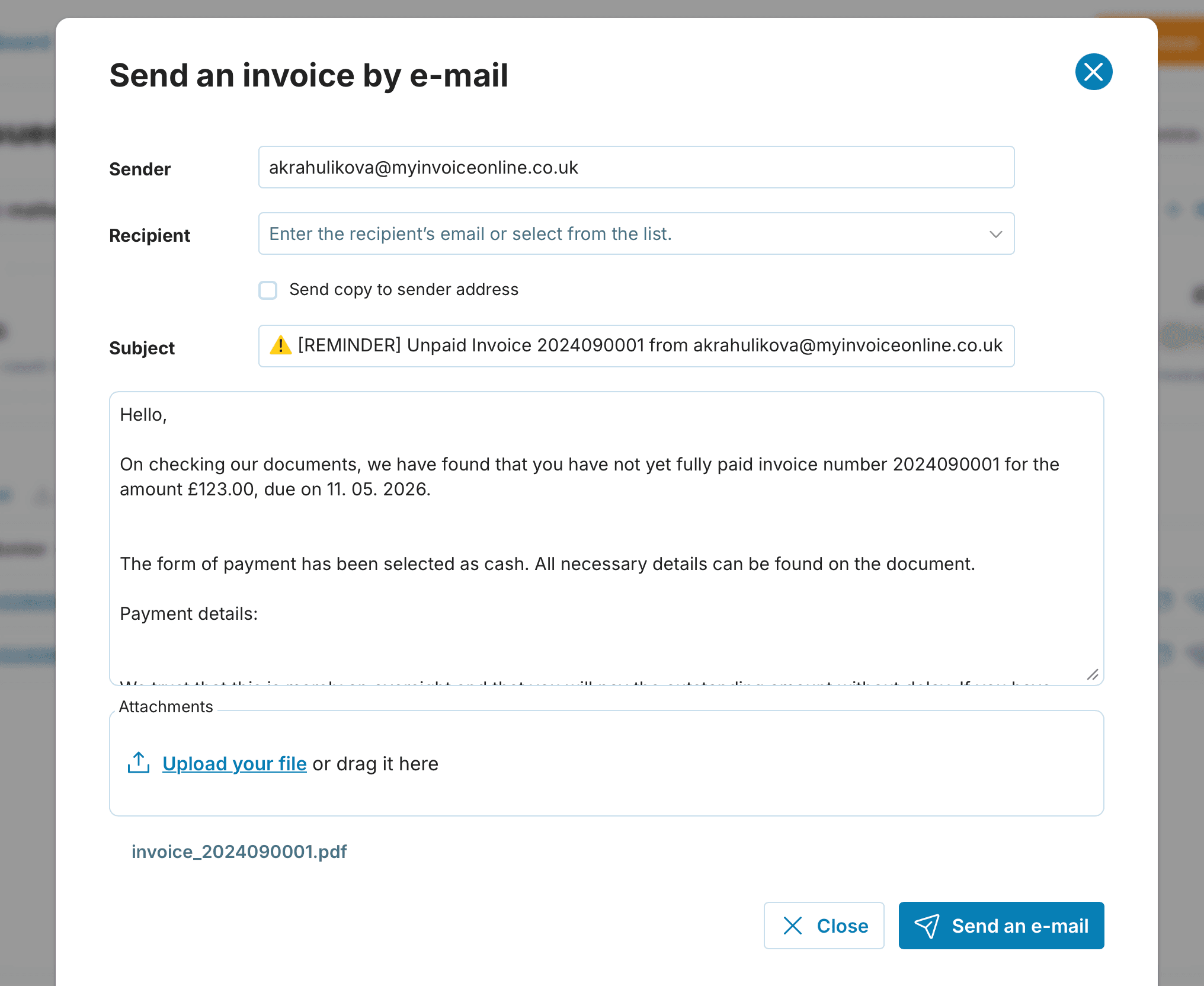
Send the reminder with the Send email button.
Prevent problems before they start
You set the due date on each invoice yourself, based on what you agreed with the client. And to put your terms in writing, use the notes field when you create the invoice — you can note, for example, that overdue payments are subject to statutory interest and compensation. The client sees it right on the invoice, your terms are documented from the start, and a second reminder won't catch anyone off guard.

How to create your own email templates (including reminders)
When is an invoice officially overdue?
The day after the due date, if payment hasn't arrived. If you didn't agree a date, payment is due within 30 days of the invoice or receipt of the goods or services, whichever is later.
Do I need a clause in my contract to charge interest?
No. For business-to-business invoices, statutory interest and fixed compensation apply automatically under the Late Payment of Commercial Debts (Interest) Act 1998, even if your contract says nothing about late payment.
How much statutory interest can I charge?
8% above the Bank of England base rate. With the base rate at 3.75% in 2026, that's 11.75% a year. It's simple interest and runs from the day after the payment was due.
What is the fixed compensation, and can I claim more?
A fixed sum per overdue invoice: £40 for debts up to £999.99, £70 for £1,000–£9,999.99, and £100 for £10,000 or more. If your reasonable recovery costs are higher, you can claim the difference on top.
Does this apply if my customer is a consumer?
No. Statutory interest and compensation apply only to business-to-business and public authority invoices. For a consumer, you'd rely on your contract terms and any interest a court awards if it goes that far.
How long do I have to chase an unpaid invoice?
In England and Wales, six years from the due date; in Scotland, five. After that the debt is usually "statute-barred" and can't be enforced through the courts.
