How to Amend an Invoice: Fixing Errors With a Credit Note

While it's still a draft, change whatever you like
An invoice you haven't sent anywhere yet is just a working document. Change the line items, figures, customer details and dates as much as you like — or scrap it and start again. Nothing formal is needed while the invoice is neither sent nor entered in your books.

Once it's with your customer, HMRC rules apply
As soon as you send an invoice, it stops being only yours. Your customer may have entered it in their accounts, and if you've recorded it too, it's part of your own books. From here on, you don't fix an invoice by rewriting it.

Instead, you correct the record with a separate document:
Credit note: reduces or cancels the amount on the original invoice — for returns, an overcharge, or a discount agreed after the fact.
Debit note: increases the amount, for example when something was left off or a price went up.
Re-issued (corrected) invoice: replaces the original — best when it hasn't really entered circulation yet.
If you're VAT-registered, the credit note has to handle the VAT too. Per HMRC, issue it within 14 days of the price change or refund, credit the VAT in the same proportion as the original invoice, and adjust the VAT on your return for the period in which you issue the credit note.


Amending an invoice in MyInvoiceOnline
In the app, the steps follow the same logic — what you do depends on the state the invoice is in.
A draft invoice
An invoice you haven't issued yet, you simply open and edit as needed.

An invoice you've already issued
Editing an invoice after you've issued it is part of the Premium plan (and it works during your free trial). On the Mini plan, an issued invoice is view-only — you can't change it after the fact.
To correct the amount, MyInvoiceOnline lets you raise a credit note against the original invoice. Reference the original, enter the adjustment (the returned items or the corrected figure) and the reason, then save the document and download or send it.
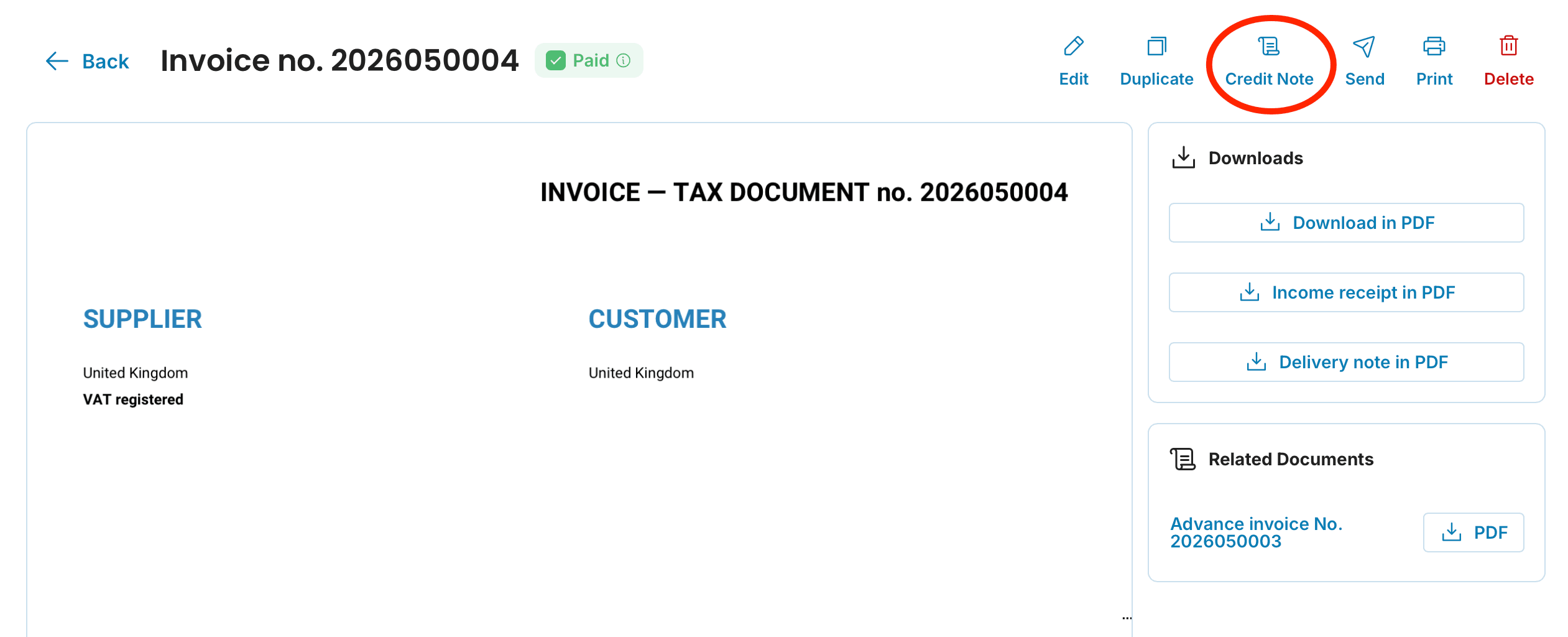

Create a VAT credit note online — enter the details and generate a compliant PDF.
Can I change an invoice after I’ve sent it?
Not by overwriting it. Raise a credit note that references the original to reduce or cancel it, or a debit note to increase it. Leave the original invoice in your records — HMRC expects a clear trail.
How long do I have to issue a VAT credit note?
If you're VAT-registered, HMRC's rule is within 14 days of the price change or refund, so your VAT return for that period reflects the adjustment. If you bill monthly, you can ask HMRC for an extension.
Does my credit note need to show VAT?
If the original invoice included VAT, yes — the credit note must credit the VAT in the same proportion as the original, or HMRC may treat it as invalid.
Do I need to send the credit note to my customer?
Yes. They need it to adjust their own records, and their input VAT if they're VAT-registered. Reference the original invoice number so both sides reconcile cleanly.
I only mistyped the address, not the amount. Do I still need a credit note?
If nothing about the value or VAT changes, you can usually re-issue a corrected invoice or send a short note. For small clerical errors that don't affect your customer's VAT, HMRC often lets you put things right on your next VAT return. A credit note is for changes to what's owed.
Can I amend an issued invoice on the Mini plan?
No. On Mini, an issued invoice is view-only. To edit invoices after issuing them, you'll need Premium (it also works during your free trial).
